TEACHING
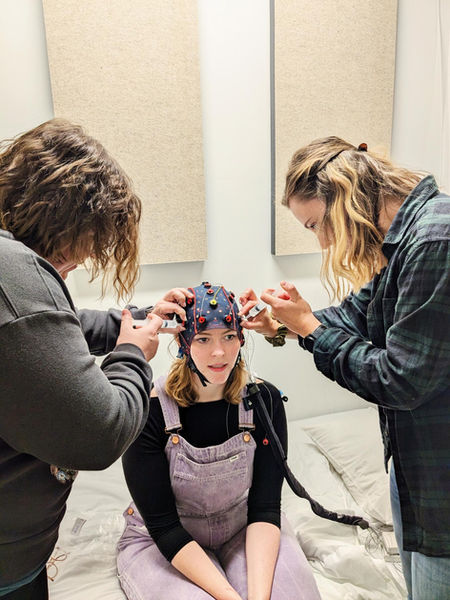

Teaching dreaming as a scientific phenomenon that can be measured, questioned, and explored
Supporting students in developing independence confidence and critical thinking
Teaching is an extension of my scientific work. I designed and taught the 5-ECTS course The Science of Dreaming at the University of Bern, developing the curriculum independently to introduce students to dreaming as a scientifically accessible phenomenon. The course combines neuroscience, sleep physiology, neuroimaging, neurostimulation, and philosophy, and encourages students to actively engage with open scientific questions. Rather than focusing on memorization, teaching emphasizes independent thinking, discussion, and the development of research ideas. The goal is to create an environment where students feel comfortable exploring complex questions and developing their own scientific perspective.
The Science of Dreaming (Bachelor, 5ECTS)
This course introduces dreaming as a scientifically accessible phenomenon and explores how subjective experience during sleep can be investigated using neuroscientific methods. The course was fully developed and taught independently, integrating perspectives from neuroscience, physiology, psychology, and philosophy. Students learn how dreaming emerges from brain activity during sleep and how modern research methods allow the systematic investigation of dream experience, including lucid dreaming.
Topics covered
Neurobiology and physiology
-
Sleep architecture
-
REM sleep physiology
-
Neural correlates of dreaming
-
Brain activity underlying conscious experience during sleep
Scientific Methods
-
Polysomnography (EEG, EMG, EOG)
-
Neuroimaging approaches
-
Behavioral and subjective measures of dream experience
-
Non-invasive sensory stimulation
-
Real-time dream communication
-
Experimental induction techniques
-
Virtual reality
Ethics and Philosophy
-
Philosophical perspectives on dreaming
-
Ethical implications of dream engineering
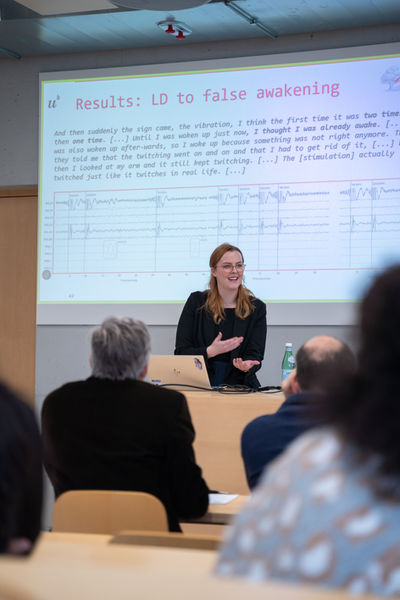
Learning approach
The course emphasizes active learning and scientific thinking. Students engage in discussion, critically evaluate scientific literature, and develop their own research questions and experimental ideas. Assignments focus on applying scientific concepts, designing studies, and communicating complex ideas clearly.
Learning goals
Students learn to:
-
understand the neurobiology and physiology of dreaming
-
evaluate scientific methods used to study subjective experience
-
critically interpret neuroscientific evidence
-
develop independent research questions
-
integrate perspectives from neuroscience, psychology, and philosophy
-
communicate scientific ideas clearly and confidently


